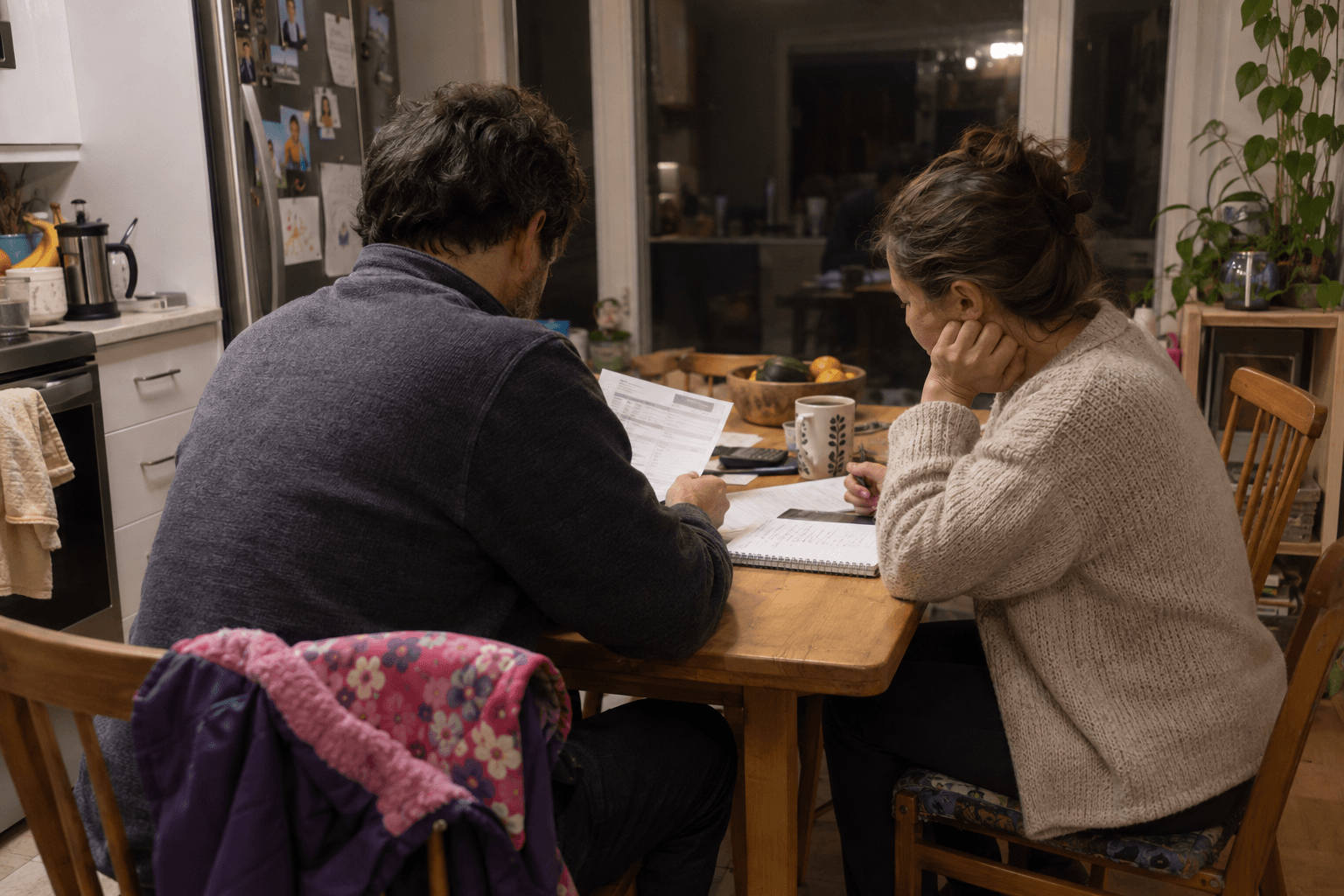
Maya and her partner have shared a home for a year. They have not married, so she assumes the CRA still treats each of them as single. Before renewing a benefit estimate, she checks the tax definition of common-law partner.
A wedding is not the only event that changes marital status for tax and benefit purposes.
Establish the correct status and date
The common-law definition generally includes living together in a conjugal relationship for 12 continuous months. Other conditions, including certain relationships involving a child, can establish the status sooner. Sharing a lease as roommates is not the same as living in a conjugal relationship.
Maya records the facts and effective date rather than choosing a label according to which benefit estimate is larger. If the circumstances are unusual, she checks the definition before reporting.
The child-related conditions are specific. A person living with you in a conjugal relationship can be your common-law partner before twelve months if they are your child's parent by birth or adoption. The definition also covers a person with custody and control of your child who is wholly dependent on them for support, subject to the CRA's age-related wording. It is not a general rule that any roommate helping with a child becomes a partner.
Treat separation according to its own rule
For a relationship breakdown, the CRA generally requires living separate and apart for at least 90 consecutive days before reporting separated status. Once that period is met, the effective separation date is the first day of the period.
Living apart temporarily for work or school does not automatically establish separation due to a relationship breakdown. Keep the reason and dates clear.
Update promptly and check the result
The general reporting deadline is the end of the month following a marital-status change, with the separation waiting rule taken into account. The CRA provides account and Form RC65 processes for updates.
If Maya reaches the twelve-month point on February 12, 2026, and no earlier child-related condition applies, she reports the new common-law status by March 31. She does not wait to file the 2026 return in 2027. The CRA says a benefit adjustment resulting from a marital-status change starts with the month after the change; processing and the arrival of a revised notice are separate from that effective date.
Maya checks that both partners' information is consistent and retains the confirmation. Benefits may be recalculated using the new family circumstances, potentially changing payments or producing an overpayment balance.
The couple still files individual Canadian income tax returns. Updating marital status does not create a joint return, and changing an address alone is not a substitute for reporting the relationship change.