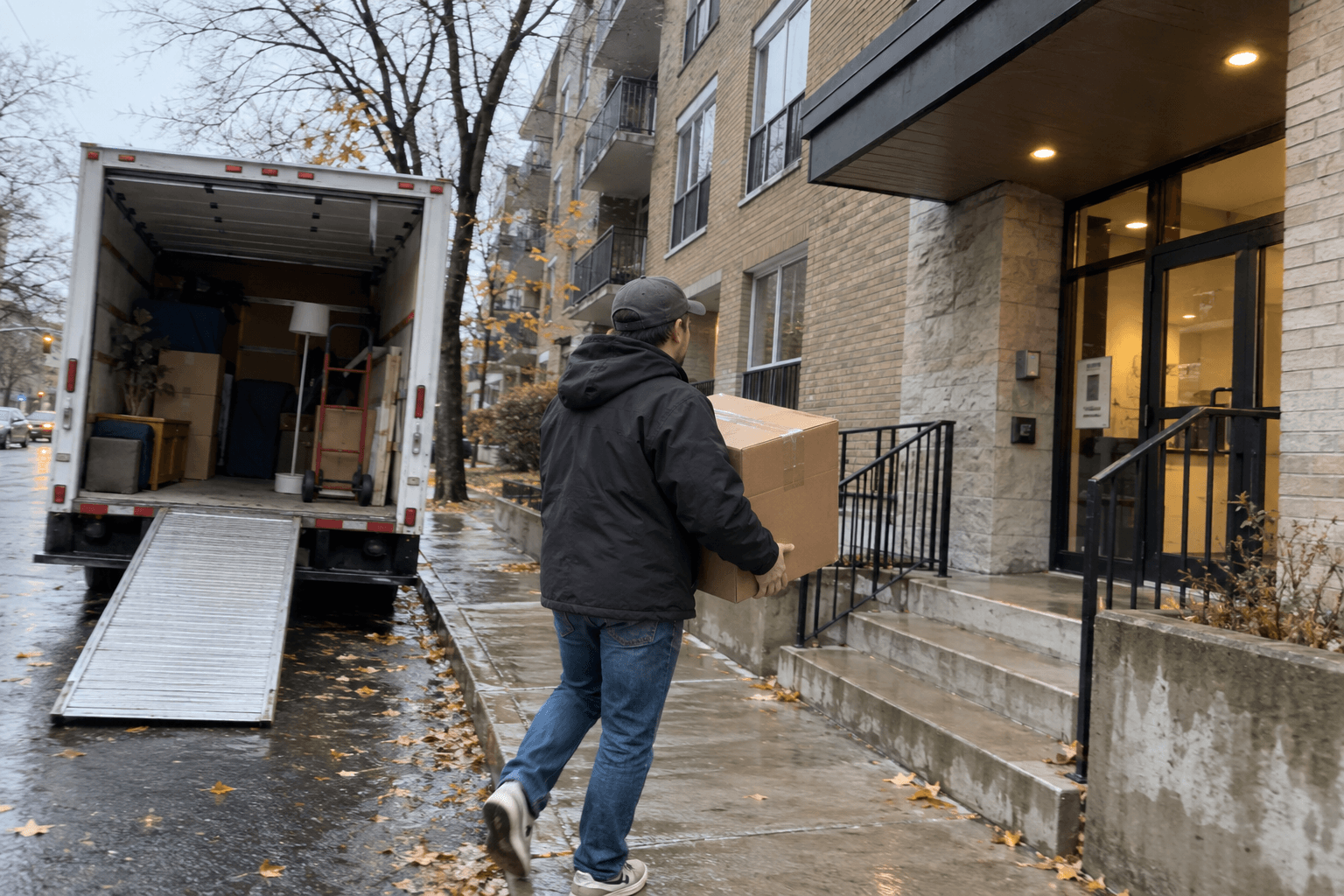
The moving truck arrived on December 28. The internet arrived in January. Amélie and Nicolas had a new Ontario apartment, a Quebec lease ending December 31 and a tax question somewhere under the box labelled kitchen.
They wondered whether eleven months and most of December in Quebec meant filing most of the year there. For an ordinary Canadian resident's provincial income tax, that is generally not how the year is divided.
December 31 matters, but the address is not the whole answer
Provincial income tax generally follows the province where you are resident on December 31. If you have ties to more than one province, the place with the most significant residential ties matters. CRA explains this in its residence-status folio, paragraphs 1.2 and 1.3.
That is a factual question. It is not settled by the province with the lower tax, the last pay stub, where you attended a New Year's party or the address on an envelope.
Amélie writes down when each home became available, when they actually moved their household and where they ordinarily lived at year end. The overlapping leases explain a few days of rent. They do not, by themselves, resolve every residence question.
Build a short timeline while the facts are fresh
A useful file identifies the old and new homes, the dates of possession and occupation, the household's actual move, and any home retained elsewhere. Keep the leases or purchase documents, mover's invoice and relevant correspondence together. Record where a spouse or dependants remained if the household moved in stages.
This file should explain what happened. Changing a date on a utility account or forwarding mail does not create a move that did not occur.
A temporary work assignment is particularly different from relocating the household. Revenu Québec notes that someone who keeps significant Quebec ties while working or studying elsewhere can remain a Quebec resident despite being physically away on December 31. Leaving Quebec: residence and tax obligations.

Do not split ordinary provincial tax by months
For someone who becomes resident in another province by year end, Revenu Québec explains that the ordinary provincial calculation generally follows that province for the whole year's income. It is not automatically eleven-twelfths Quebec and one-twelfth Ontario.
Separate rules can apply to business income allocated among establishments, a death, or entering or leaving Canada. A move between Canadian provinces is not the same as becoming a non-resident of Canada. If those facts are involved, use the relevant return instructions rather than extending this household example.
The employer's deductions during the year may also reflect a different province. Preserve the slips as issued and reconcile the annual calculation. Do not rewrite the withholding history to match the new address.
Then update the accounts and check the separate claims
Once the residence position is established, use the appropriate return package and review any remaining Quebec filing obligations. Update CRA, Revenu Québec and other accounts that need the new address; one update does not necessarily reach all of them.
A moving-expense deduction has its own conditions. The fact that a move changes provincial residence does not automatically make its costs deductible. Keep that question separate from the residence timeline.
Amélie still cannot find the teaspoons. She can find the dates. For this part of the move, that is more useful.
Checked October 20, 2026. Continue with address updates after a move or the separate work-related moving-expense test.