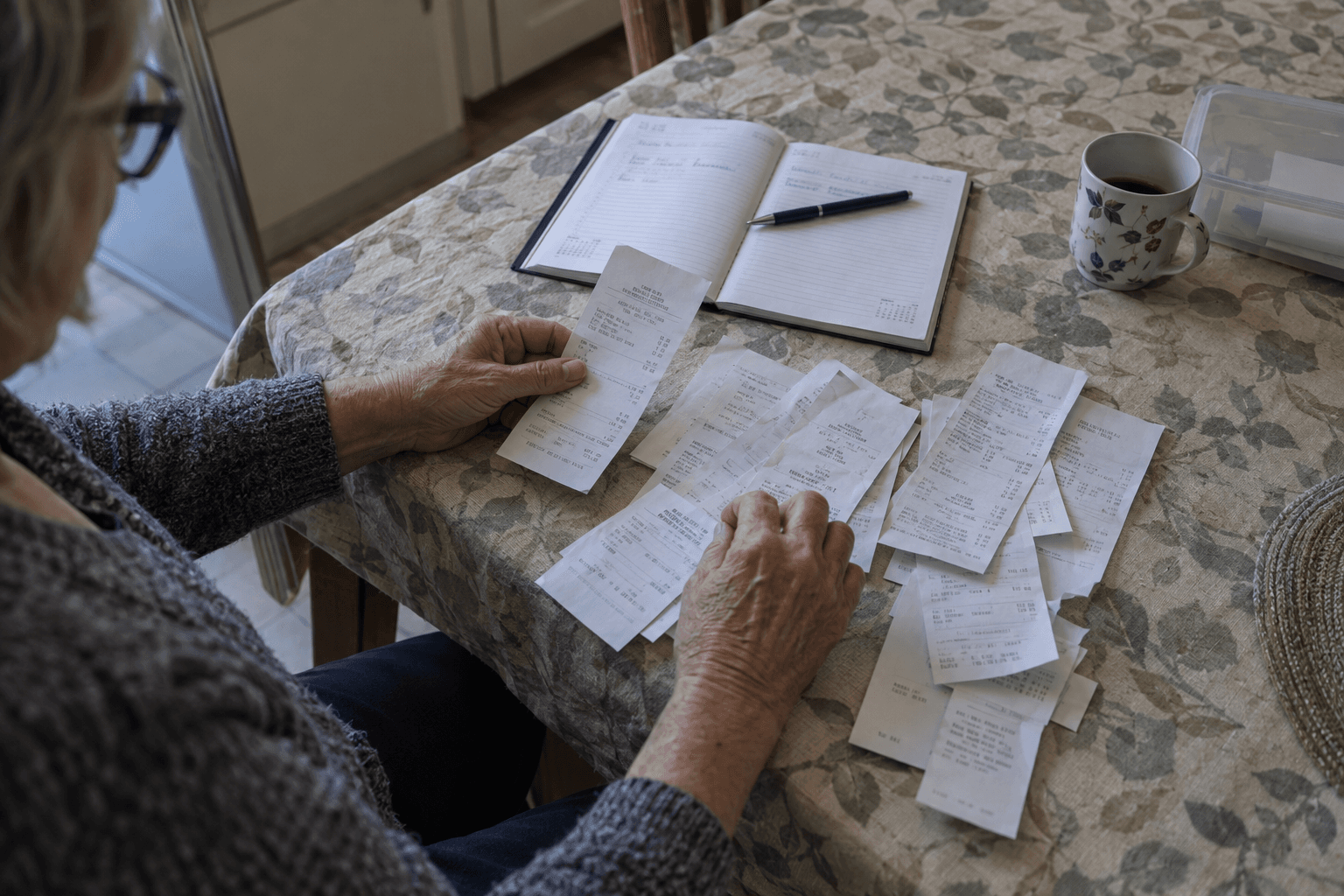
George, 73, has new prescription glasses, dental bills and a folder of insurance statements. He nearly overlooks Ontario's seniors care at home tax credit because he has not hired a home-care worker.
The credit is tied to eligible medical expenses. Its name does not restrict it to invoices from a home-care agency. Prescription glasses can be medical expenses; ordinary non-prescription purchases do not qualify simply because a senior bought them. CRA medical-expense guide.
Check age, residence and family income
For the ordinary 2025 claim, you or your spouse or common-law partner must be at least 70 on December 31, and you must be an Ontario resident at year-end. You also need a medical-expense amount at line 58769 of ON428 and family net income below $65,000.
Family net income generally combines line 23600 for you and your year-end spouse or partner. There are specific rules following a death, and the credit is unavailable for a tax year ending in a year of bankruptcy. CRA's Ontario eligibility instructions.
The receipt total is not the starting line
First establish which expenses qualify, remove applicable insurance reimbursements and choose the permitted claim period. Keep prescriptions or certifications where required. George puts the optician's paid receipt beside the insurer's statement so the unreimbursed amount can be checked.
The Ontario medical-expense calculation applies its income threshold before arriving at line 58769. This calculated amount, rather than the unadjusted stack of receipts, feeds into the seniors credit. Expenses for other dependants can involve an additional calculation. ON428 medical-expense calculation.
Our medical-expense period guide explains how a permitted 12-month period can affect the receipts available for a claim. Do not count an expense again after using it in the previous year's period.
Work through the two reductions
On the 2025 ON479, take 25% of line 58769, up to a maximum of $1,500. Then reduce that amount by 5% of family net income over $35,000, with a floor of zero. ON479 form and calculation.
Suppose George's line 58769 is $4,000 and his family net income is $42,000:
| Calculation | Amount |
|---|---|
| $4,000 × 25% | $1,000 |
| ($42,000 − $35,000) × 5% | $350 |
| $1,000 − $350 | $650 |
His credit is $650, not 25% of every medical bill he paid. If his claimable amount were smaller, the credit could disappear before family income reaches $65,000.
Keep the claim with the medical calculation
This credit is refundable, so it can help even when there is no income tax payable. Complete the seniors section of ON479 at line 63095 and retain the supporting medical-expense calculation. The credit's effect on the final refund still depends on the rest of the return.
George keeps three figures distinct: the bills paid, the medical amount after the applicable threshold and the additional seniors credit. Each answers a different question, and the insurance statements explain how he got from the first to the next.
Checked October 20, 2026, against the 2025 Ontario forms.