The residence sent me one annual total. I could see the cost of living there. I could not yet see the amount that belonged in my medical-expense claim.
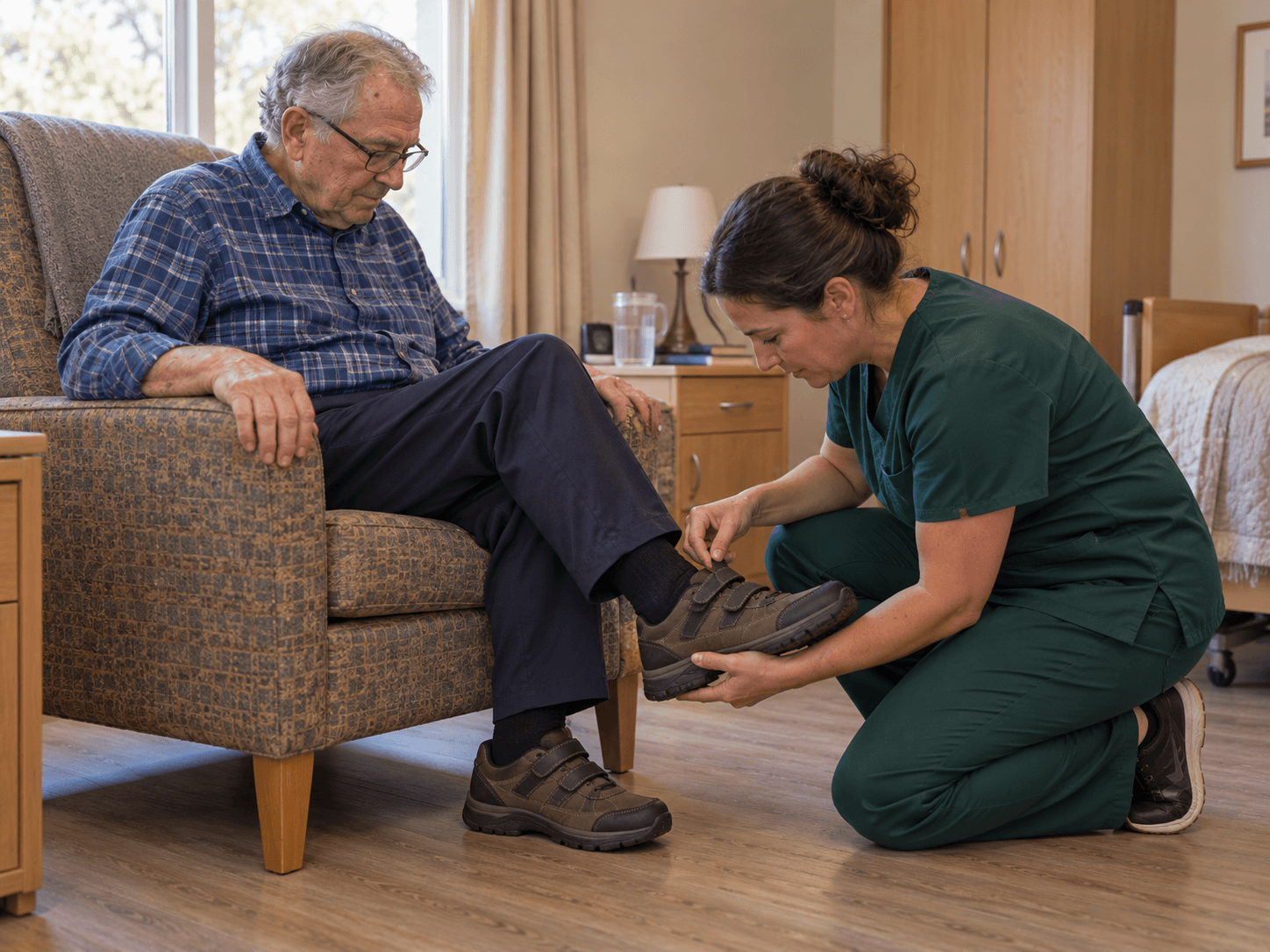
My daughter offered to enter it into the software. I asked her to wait while I requested the breakdown. The person helping with my shoes, the food on my plate and the rent for my room did not all follow the same tax rule.
Establish what kind of care you are paying for
A retirement residence is not automatically a nursing home for tax purposes. Full-time nursing-home care generally involves constant care and attendance, including 24-hour nursing care. Eligible regular nursing-home fees can include accommodation and food. In a retirement residence, the entire bill is generally not eligible; qualifying attendant-care wages need to be identified separately. CRA's facility distinctions.
The facility's name did not answer that question. I needed the services actually provided, my circumstances and the required medical certification.
Ask for the eligible wage portion
The breakdown can identify wages for personal care, nursing, food preparation, and cleaning or laundry for a resident's own living space. Food purchases, ordinary rent and general administrative or maintenance wages do not become eligible attendant-care wages. Subsidies must be accounted for too. Eligible services and detailed statements.
Suppose my annual statement shows $36,000 paid, of which $12,000 is qualifying attendant-care wages after any relevant subsidy. The useful starting number is $12,000, not the whole $36,000. Even then, I still need to choose the permitted claim.
Compare the combinations, not just the biggest expense
For the federal category covering attendant-care wages in Canada, an approved T2201 can allow the disability amount together with up to $10,000 of those expenses. The limit becomes $20,000 in the year the care recipient dies. Other categories have different combinations; this is not a universal limit on all medical care. CRA's certification and claim chart.
If eligible full-time nursing-home fees are claimed as medical expenses, no one can also claim the disability amount for that same person. An alternative can be the qualifying wage portion, limited as above, together with the disability amount. Claiming the disability amount on a relative's return does not bypass the restriction. Nursing-home interaction.
My $12,000 wage statement does not automatically give me a choice to claim all $12,000 by giving up the disability amount. The capped wage category still has its own limit. An alternative claim for full-time care must meet that category's separate conditions. Where both routes are available, compare the completed tax calculations, including the medical threshold and any family transfer. CRA's distinction between capped wages and full-time care, paragraphs 1.35 to 1.42.
For Ontario in 2025, the corresponding provincial wage limit is $17,627, or $35,253 in the year of death. The federal $10,000 limit therefore should not simply be copied into every provincial calculation. 2025 medical-expense guide.
Match the documents to the chosen category
An approved DTC certificate is required for some combinations. Certain full-time-care claims can instead use the specific medical certification described in the CRA chart. Receipts and the facility's wage breakdown are separate evidence; one does not replace the other. For a privately hired attendant, the attendant must generally be at least 18 and cannot be your spouse or common-law partner. Certification and receipt requirements.
Once the breakdown arrived, my daughter and I could compare actual choices. We kept the annual total for our budget and the detailed statement for the tax file. Both numbers were useful, for different jobs.
Checked October 20, 2026. Federal claim interactions and stated Ontario 2025 limits; other provincial calculations require their own review.